
Is Rwanda really a development success?
The country the development world holds up as its model, and why the picture is more complicated, and more interesting, than the brand suggests.

There is a particular look that crosses people’s faces when the conversation turns to Rwanda. I have seen it in Addis Ababa, in Lilongwe, in Nairobi, and across the table from ministers, PhD students and diplomats alike. It is something close to admiration, with an edge of envy. Rwandans, people tell me, get things done.
On the surface, the evidence is everywhere. Kigali is spotless. Cleaner, I would argue, than Singapore! The motorcycle taxis stop at red lights, and every rider wears a helmet. I have not seen that anywhere else on the continent. Growth has held above six per cent for most of three decades. Maternal and child mortality have fallen steeply. Women hold a striking share of the seats in parliament. And one Saturday a month, the entire country sets down its work so that neighbors can clean their streets together (“Umuganda”).
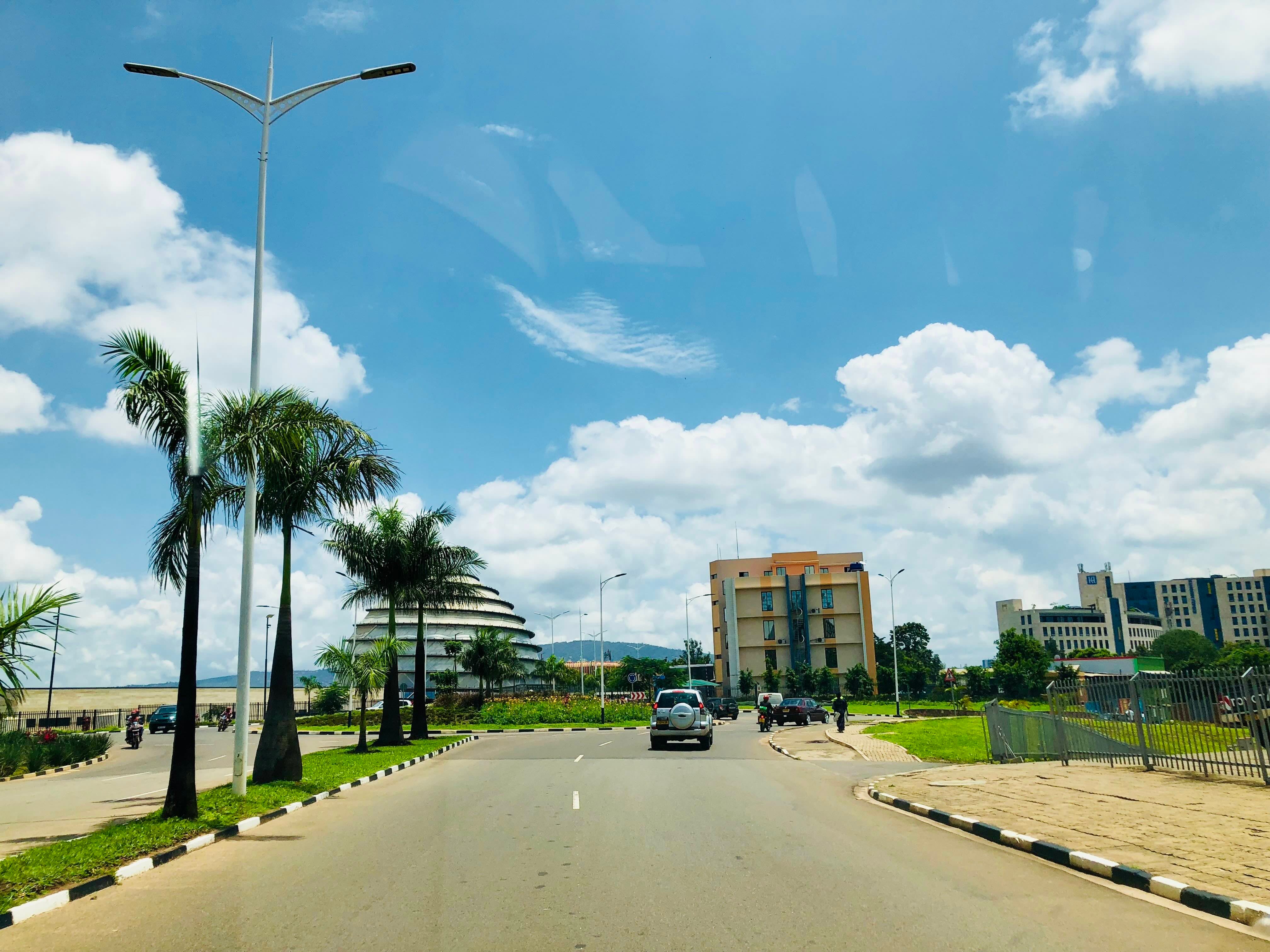
That cleanliness is partly a matter of law. Rwanda banned plastic bags in 2008 (among the first countries anywhere to do so, and the first in East Africa) and widened the prohibition to most single-use plastics in 2019. Visitors still have bags confiscated from their luggage on arrival. It is a genuine environmental achievement. It is also, like so much here, a thread in the brand. Rwanda now presents itself, with some justification, as one of the cleanest and greenest countries on the continent.
None of this is accidental. President Paul Kagame has called Rwanda “Africa’s Singapore” and named Lee Kuan Yew an inspiration (Behuria 2018). Indeed, the ambition behind the phrase is vast. To vault, within a single generation, from an agrarian economy shattered by the 1994 genocide into a modern and knowledge-based one.
So, is Rwanda a development success? I put exactly that question this week to Pritish Behuria, Associate Professor in Politics, Governance and Development at the University of Manchester, who has studied the country since arriving there as a doctoral researcher in 2011, and who has just written a book — The Political Economy of Rwanda’s Rise — about it. He declined the easy answer. “It’s a tricky question,” he told me, “so I won’t give you a yes or no.” In many ways, he said, “it is a success.” But the word he kept returning to was a more demanding one. Transformation.
Growth is one thing. Transformation is another.
The distinction sits at the heart of Pritish’s work. While rapid growth is one achievement, structural transformation (the shift of an economy away from low-skilled, primary production toward higher-skilled, knowledge-based activity) is quite another. On that second measure, he argues, Rwanda has not yet arrived. The tell is the absence of internationally competitive domestic firms, “which,” as he put it to me, “is what sets apart East Asian developmental states and most other global South countries.”
Behind this lies a bold and deliberate gamble. The classic East Asian developmental states (e.g., Japan, South Korea, Taiwan) built their transformations on manufacturing. Rwanda, landlocked and burdened by high transport costs, chose instead to “leapfrog” straight to services. In Leapfrogging Manufacturing?, Behuria and Goodfellow (2019) trace where that has led. The services share of GDP climbed from 29 per cent in 1994 to over 47 per cent by 2015, carried by tourism, finance and real estate — the sectors they label MICE (Meetings, Incentives, Conferences and Events) and FIRE (Finance, Insurance and Real Estate). The Kigali Convention Center, the most expensive building complex in Africa, is the strategy rendered in concrete; the #VisitRwanda sleeve on Arsenal’s shirts is its billboard.
The catch is that these modern sectors generate growth without generating many jobs. Real estate, Behuria and Goodfellow note, made up almost 8 per cent of GDP in 2017 (more than the whole manufacturing sector), but employed roughly 0.1 per cent of the population. The outcome, they argue, is not one development story but two running in parallel. It is a growth story in modern services, and a human-development story in basic services such as health and education, with little binding the two together. In East Asia, rising skills and rising industry pulled each other upward. In Rwanda, the structural transformation rests, in their phrase, on “fragile foundations.” It is why Pritish remains, in his own words, “skeptical of the services-led model, because no one has done it before.”
The brand, and the country behind it
If you have spent time in Rwanda, you will have felt the pull of its image. I admitted as much to Pritish on the show: “maybe I’m also guilty of being a bit brainwashed with this wonderful brand.”
Behuria (2018) gives that brand an analytical name — incoherent emulation. Rwanda, he argues, has borrowed different models from different places for different and sometimes conflicting ends. The Rwanda Development Board was modeled explicitly on Singapore’s Economic Development Board. But where the Singaporean agency drove industrialization, its Rwandan counterpart has worked largely as a shopfront for climbing the World Bank’s Doing Business rankings (Rwanda was named the world’s leading reformer in 2009) and signaling to investors that the country is open for business. As one consultant told Behuria, Rwanda “tries to be everything to everyone.”
But there is also real agency at work here. This is not a country passively absorbing donor blueprints. One senior RPF figure described the logic to Behuria with disarming candor. Because the country is poor, it is told how to spend donors’ money. But when donors fund health, the government builds hospitals, and then “still find[s] ways to build the roads” it wanted all along (Behuria 2018). On air, I called this a kind of cunning plan; a vision the leadership sells *to* its donors rather than receiving *from* them. Pritish was more careful than I was. But he did not quite disagree.
Clothes, minerals, and the harder edges
Two moments in our conversation reveal what happens when this strategy meets the wider world.
The first is the story of second-hand clothes. Around 2012, as Rwanda set itself a demanding jobs target and returned to industrial policy (Behuria 2016), President Kagame pressed the East African Community to phase out imports of used clothing. He framed it, pointedly, as a question of human dignity, and as a way to nurture a domestic garment industry. The United States, lobbied by its own textile recyclers, retaliated by threatening East African countries’ preferential access to the American market under AGOA. Kenya backed down, Pritish recounts, and then Uganda. Rwanda held firm, in part, he notes, because it was barely exporting through AGOA to begin with. The cost was immediate. A Chinese garment firm, invited in to manufacture for the US market, simply left. It is a small episode that holds a large dilemma about how a tiny economy can pursue an industrial vision of its own when the rules of trade are written elsewhere.
The second is minerals, and here the picture darkens. Rwanda has long served as a conduit for minerals leaving the eastern Democratic Republic of Congo, and Pritish is blunt about how little a tagging system (introduced around 2013 to certify where minerals originate) has changed that. “Everyone’s benefiting from not tagging,” he told me. In the year the system arrived, he points out, Rwanda’s recorded mineral exports rose sharply, though many of those minerals are not mined in Rwanda at all. The allegations surrounding Rwanda and the DRC are contested, the government rejects them firmly, and, as Pritish is careful to stress, the narrow language of “conflict minerals” has itself been faulted for obscuring the longer and deeper history of the war. But it belongs, unavoidably, to any honest account of how Rwanda’s economy works.
Dignity, jobs, and what comes next
The most revealing chapter may be the crisis of 2012. After UN allegations that Rwanda was backing rebels in the eastern DRC, several donors suspended or withdrew aid at a moment when foreign assistance still supplied over 40 per cent of government revenue. Behuria (2016) calls this a “critical juncture,” and shows how the government answered it by reaching for an idea. Agaciro, a Kinyarwanda word for dignity, for self-worth, gave its name to a sovereign fund, the Agaciro Development Fund, created almost overnight.
Agaciro was, in part, a statement of self-reliance against external pressure. But Behuria argues it did something quieter as well. It shifted the burden of creating jobs onto individuals (onto enterprising and dignified citizens) at the very moment the state’s own strategy was failing to produce enough work. The numbers behind that failure are sobering. Rwanda’s Gini coefficient stood at 0.49 in 2011/12, well above the threshold the UNDP treats as a warning. The 2012 census found roughly two-thirds of working-age Rwandans under-employed. In a country this young, that is the vulnerability that matters. Even tourism, Pritish observed (the great showpiece of the Rwanda brand) “has its limits; it doesn’t create that many jobs.”
Only thirteen
When a country struggles to transform, the instinct is to assume it has done something wrong. Stephen Brien’s recent essay is a useful corrective. Drawing on the Commission on Growth and Development, he observes that across more than six decades of development effort, only thirteen economies have ever sustained the kind of growth that genuinely reshapes a country — seven per cent a year for twenty-five years. Rwanda, he writes, is “the closest thing to a new entry” and still did not cross the line. Its longest unbroken run above seven per cent reached five years (Brien 2026).
That is the context I would ask listeners to hold on to. Transformation is not rare because Rwanda or Malawi, or anyone else has been careless. It is rare, full stop. Which makes the honest question not “why has Rwanda failed?” — it plainly has not — but “what can a small, landlocked, and post-genocide state realistically achieve, and at what cost?”
So, a success?
Halfway through our conversation, I told Pritish it seemed the two of us were “engaged in a tussle war”: I kept reaching for the successes, while he kept complicating them. By the end, though, I think we had arrived somewhere together. Rwanda’s achievements are real and deserve to be taken seriously. So do the questions about jobs, inequality, dependence, and what becomes of the model the day it is no longer steered by Paul Kagame.
The future of Rwanda, Pritish said, will not be settled by the politics of succession. It will be settled by something more elementary: whether the country can answer, for the people who actually live there, the question he kept returning to — how do you create access to better livelihoods?
Listen to the episode wherever you get your podcasts. Links to YouTube, Apple podcasts, and Spotify below.
Further reading
Behuria, P. (2016). “Countering threats, stabilizing politics and selling hope: examining the Agaciro concept as a response to a critical juncture in Rwanda.” Journal of Eastern African Studies, 10(3), 434–451. https://doi.org/10.1080/17531055.2016.1250871
Behuria, P. (2018). “Learning from Role Models in Rwanda: Incoherent Emulation in the Construction of a Neoliberal Developmental State.” New Political Economy, 23(4), 422–440. https://doi.org/10.1080/13563467.2017.1371123
Behuria, P. & Goodfellow, T. (2019). “Leapfrogging Manufacturing? Rwanda’s Attempt to Build a Services-Led ‘Developmental State’.” The European Journal of Development Research, 31(3), 581–603. https://doi.org/10.1057/s41287-018-0169-9
Brien, S. (2026). “Only Thirteen Countries Have Ever Done It.” Hidden Rules of Development (Substack), April 2026.
The growth/transformation distinction Pritish Behuria draws is important. And it's worth considering the mechanism behind the domain gap.
Export orientation is one form of it. Rwanda's speciality coffee sector illustrates this directly. Premium buyers verify quality through cupping, not government certification; the quality signal works outside any domestic reporting chain. Washing stations, varietal selection, and cherry sorting followed the price signal, not the other way round.
This is what all thirteen Growth Commission transformation cases relied on at scale: external discipline as independent feedback, forcing real, productive improvement rather than reported improvement. Rwanda's services-led strategy provides partial discipline through tourism and financial flows, but it is weaker and less granular. A convention centre can underperform for years before the market corrects; a coffee cooperative loses its premium buyers within a season.
The imihigo system shows what happens when that external circuit is absent. Agricultural production targets under domestic monitoring have shown systematic overestimation. The health sector produced real improvements, verified by external DHS surveys. Same framework, same officials, same incentive structure. The monitoring environment was the differentiating factor. Rwanda's high-performing domains are precisely those where external circuits are operative: feedback that works independently of domestic political will. And Rwanda is not alone in displaying this pattern.
That interpretation has a prediction for the succession question. Which achievements survive transition probably depends less on political arrangements than on which domains have built external performance circuits that persist without the centralising node. Speciality coffee and health have these; productive employment at scale does not. For productive employment, neither export discipline nor independent verification is yet operative. Whether the services-led path can eventually generate either is the question Behuria's scepticism poses, and the evidence does not yet provide an answer.